The Tactical Evolution of Modern Football
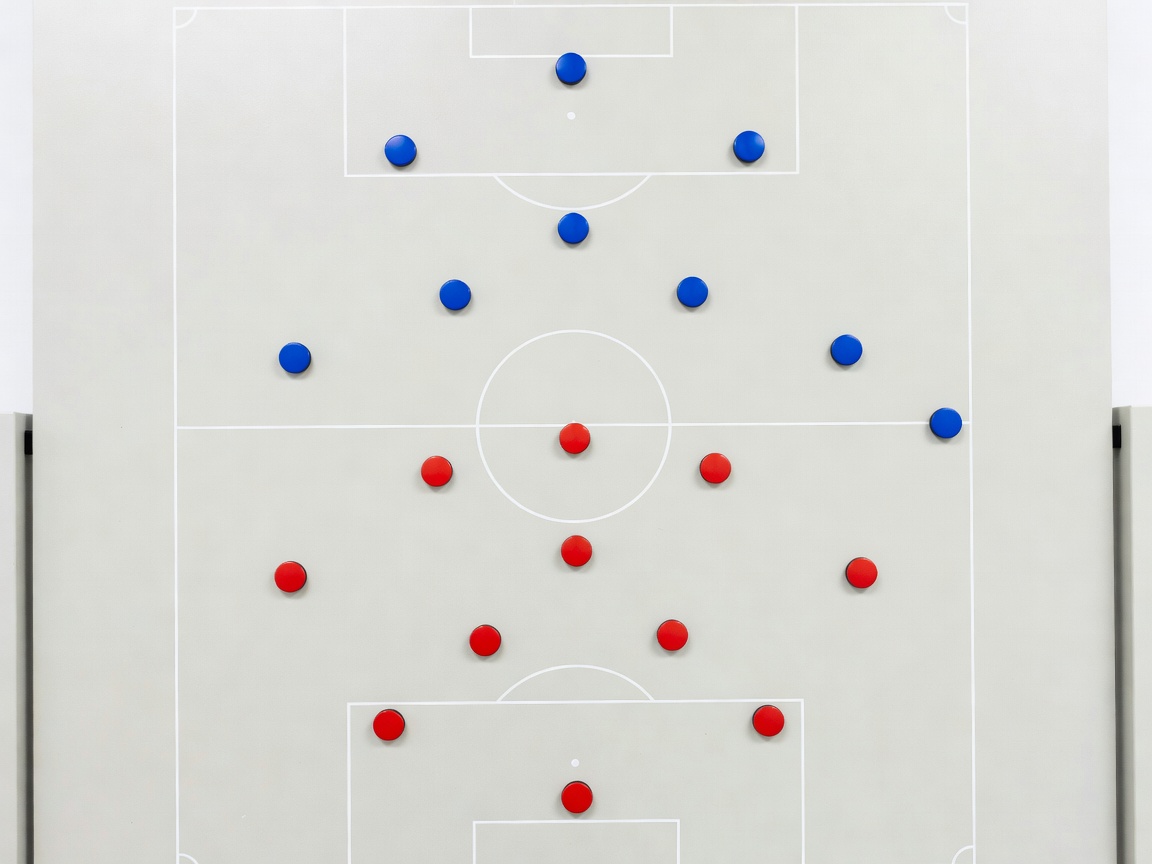
The geometry of the football pitch has remained largely unchanged for over a century, yet the way teams interpret space within those white lines is in a state of perpetual revolution. Tactical evolution in football is rarely linear; it is a cycle of innovation and counter-innovation, where the dominant strategy of one decade becomes the vulnerability of the next.
From Rigid Lines to Fluid Spaces
Historically, football formations were defined by strict positional boundaries. The classic W-M formation or the traditional 4-4-2 relied heavily on players occupying distinct vertical and horizontal channels. The objective was straightforward: win individual battles across the pitch and move the ball forward into the final third. However, modern football has shifted its focus from the player to the space itself.
The concept of positional play (Juego de Posición) mandates that the pitch be divided into specific zones, and players are tasked with occupying these zones to create numerical superiority, positional superiority, and qualitative superiority. Instead of static lines, teams now attack in dynamic shapes—often resembling a 3-2-5 or a 2-3-5 in possession—designed to stretch the opposition defense and exploit the half-spaces between the center-backs and fullbacks.
The Rise of the Inverted Fullback
One of the most defining tactical trends of the modern era is the reinvention of the fullback. Traditionally, fullbacks were defenders whose primary attacking duty was to overlap the winger and deliver crosses from wide areas. Today, tactical structures frequently utilize the "inverted fullback."
Rather than staying wide, inverted fullbacks tuck inside into central midfield areas when their team is in possession. This achieves multiple tactical objectives:
- Overloading the Midfield: By adding an extra body in the center, teams can dominate possession and more easily circulate the ball against two or three opposition midfielders.
- Rest Defense: With fullbacks positioned centrally, the team is better equipped to counter-press immediately if the ball is lost, blocking the most direct route to their own goal.
- Isolating Wingers: Pulling the fullback inside forces the opposition's wide players to make difficult marking decisions, often isolating the attacking winger in a 1v1 scenario on the touchline.
Pressing: The Engine of the Modern Game
If possession dictates how a team attacks, pressing dictates how they defend. The passive mid-block, while still useful in specific game states, has largely been superseded at the elite level by aggressive, coordinated pressing systems.
Gegenpressing, or counter-pressing, involves swarming the ball carrier immediately after possession is lost. The philosophy is built on the premise that a team is most vulnerable to losing the ball again in the seconds immediately following a turnover, as their players have expanded out of their defensive shape to transition into attack.
Modern pressing triggers are highly sophisticated. Teams will intentionally force the opposition to pass to a specific player—often a center-back with weaker ball-playing skills—before initiating a trap. Strikers curve their runs to cut off passing lanes (cover shadows), effectively halving the pitch and suffocating the opponent's build-up play.
The Integration of Data Analytics
Tactical evolution is no longer solely the domain of a manager's intuition. The integration of data analytics has fundamentally altered strategic planning. Metrics such as Expected Goals (xG), Expected Assists (xA), and Pitch Control models allow coaching staffs to quantify the value of specific zones and shot locations.
This data-driven approach has led to a noticeable decline in low-percentage long-range shots and an increase in cut-backs from the byline. Teams meticulously map out passing networks to identify where an opponent's structural weaknesses lie, tailoring their tactical approach week by week to exploit microscopic inefficiencies in the opposition's setup.
The Future: Universal Players
As tactical demands increase, the profile of the elite footballer is changing. The future belongs to the "universal player"—athletes who possess the technical proficiency to operate in tight spaces, the physical endurance to execute a high press for 90 minutes, and the tactical intelligence to seamlessly rotate through multiple positions in a single phase of play. The days of the one-dimensional specialist are fading, replaced by a holistic, relentlessly dynamic vision of the beautiful game.